
Learn the words from your textbook,
one bucket at a time.
A spaced-repetition vocabulary trainer for the Impuls Deutsch series. Listen, speak, read, and write your way to mastery.
The backbone
Spaced repetition at the core
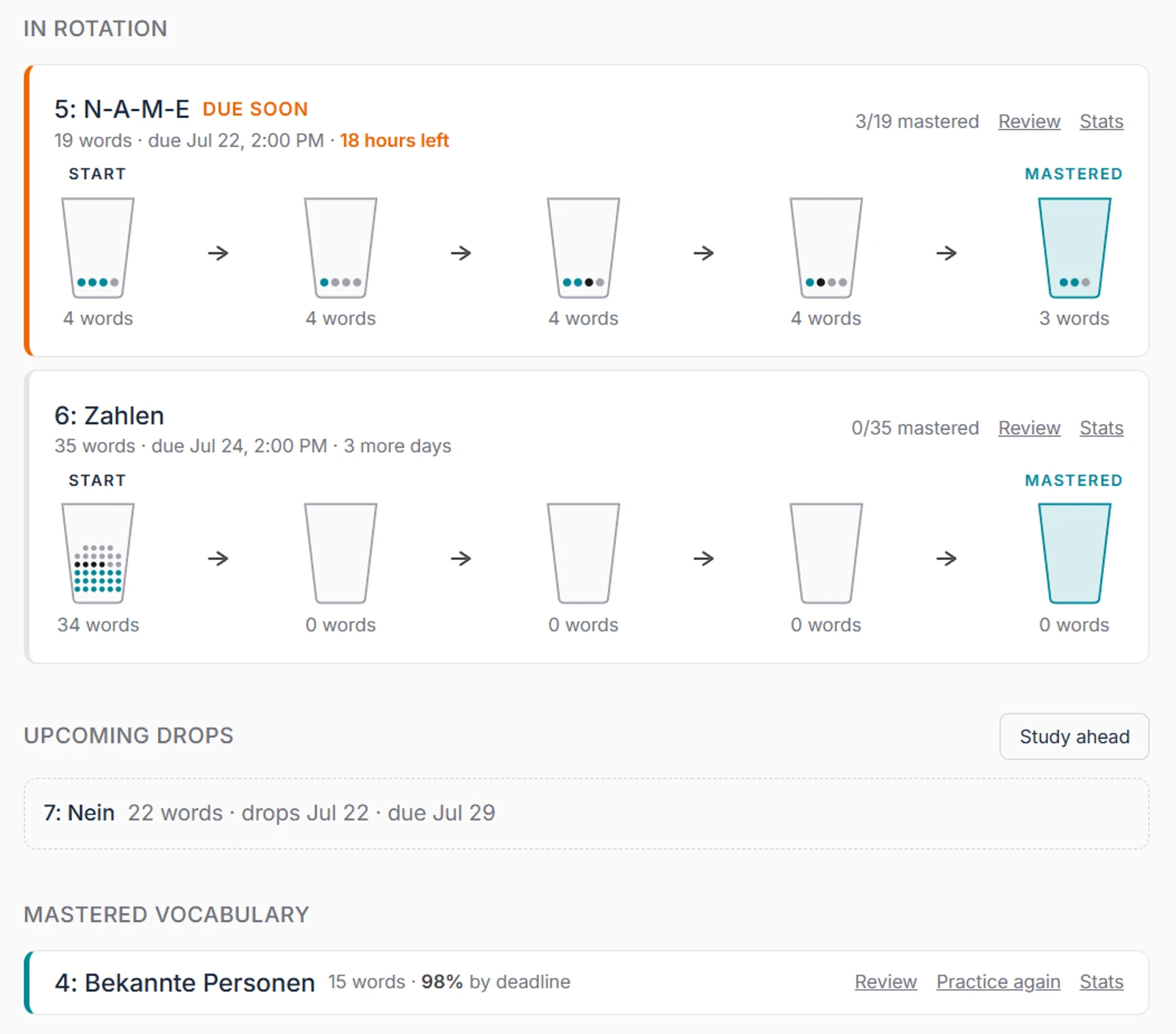
The Impuls Deutsch Vocabulary Trainer is based on the Leitner system of spaced repetition. Every word lives in one of five buckets. When a student answers a word correctly, it moves toward mastery; if a student misses a word, it moves back for more practice. This way, students spend their time exactly where they need it, on the words they haven’t yet mastered.
On top of the current unit, every study session includes two kinds of repetition: the highest-frequency words in the German language that were already learned and the words each individual student struggled to produce in earlier rounds. Words resurface just as they’re about to be forgotten, which is when review is most beneficial.
The practice
Every word, every skill
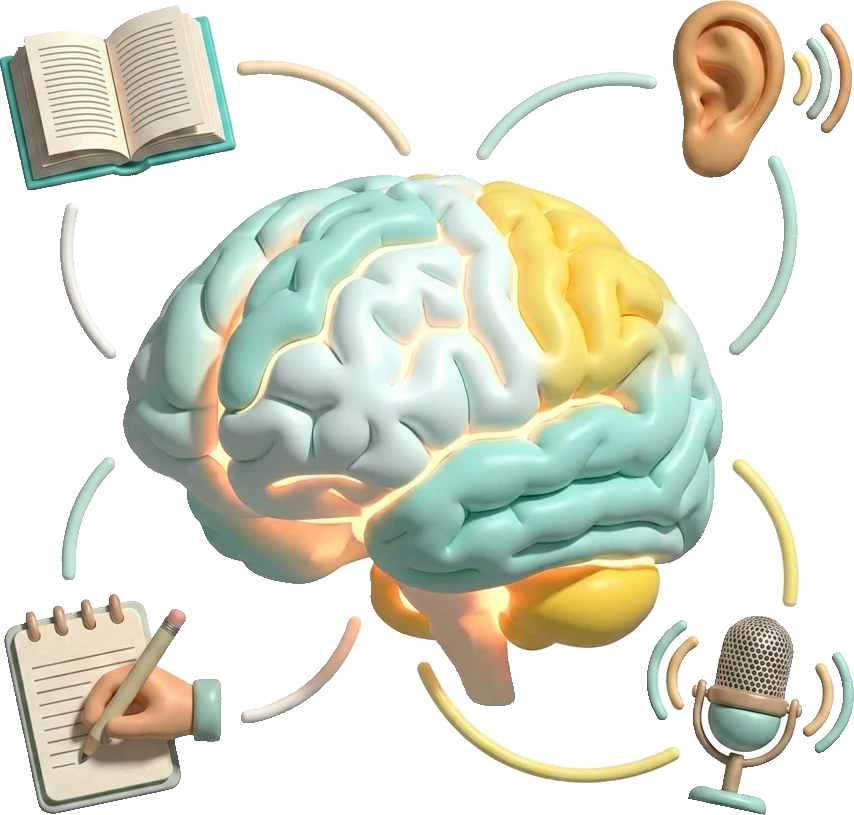
The trainer practices each word across all four skills. Students begin with simple recognition by matching a German word to its English meaning, progress to recognizing words in both written and spoken forms, and finally produce them themselves: aloud with speech recognition and in writing.
This training quickly moves beyond translation. Students match each word to its meaning(s) in German (through pictures, example sentences from the textbook series, and German definitions), which helps them build genuine comprehension based on meaning, not just translation skills.
Ten ways to know a word — try them yourself
Every unit’s vocabulary is practiced in ten distinct study modes, chosen automatically to match where a student is in their learning. Test each study mode below: click, speak into your microphone, or type your answers to experience each mode.
Hear four German words, pick the one that matches the English cue.
Click each audio. Pick the one that means:
Smart, forgiving feedback
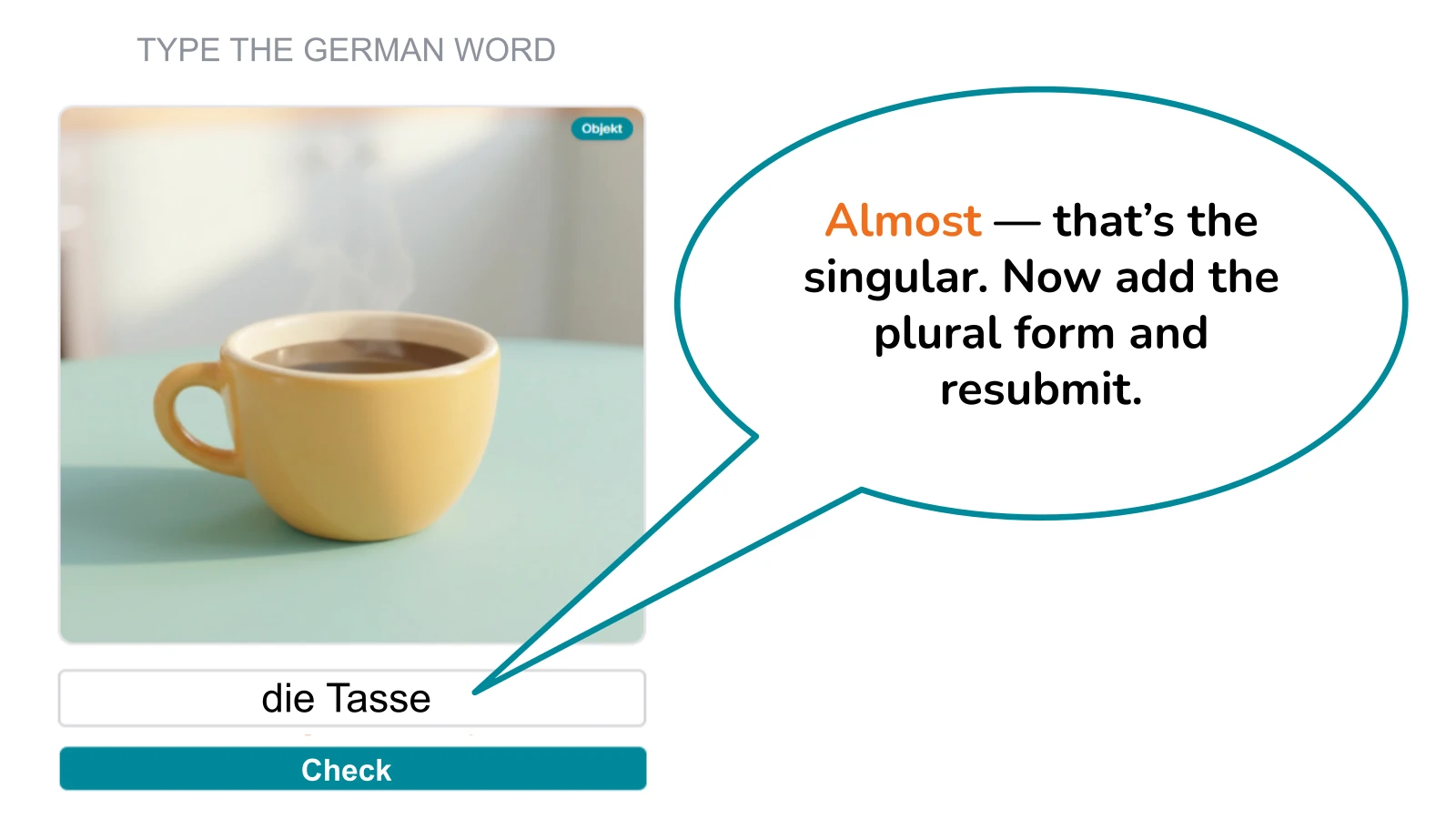
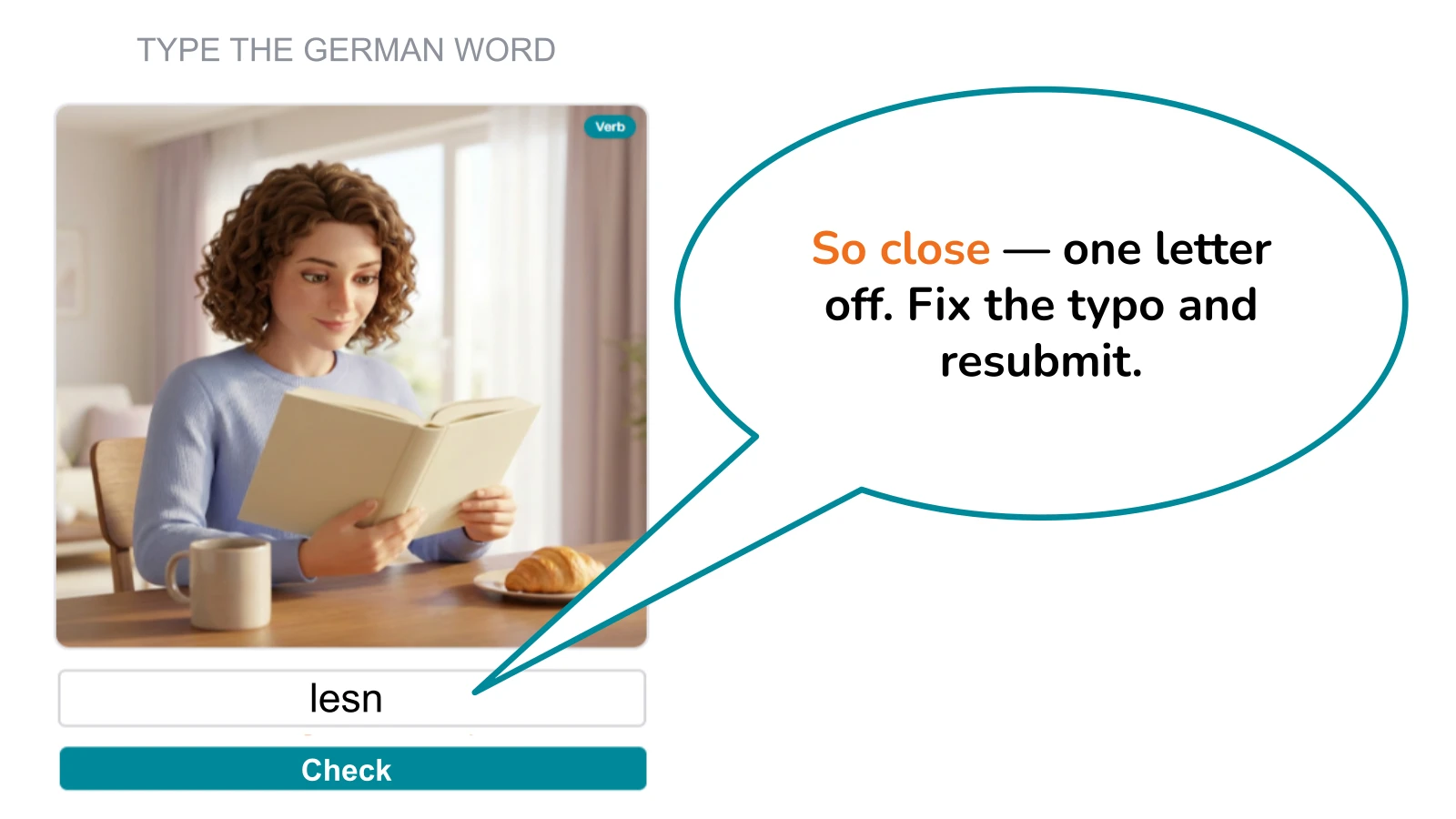
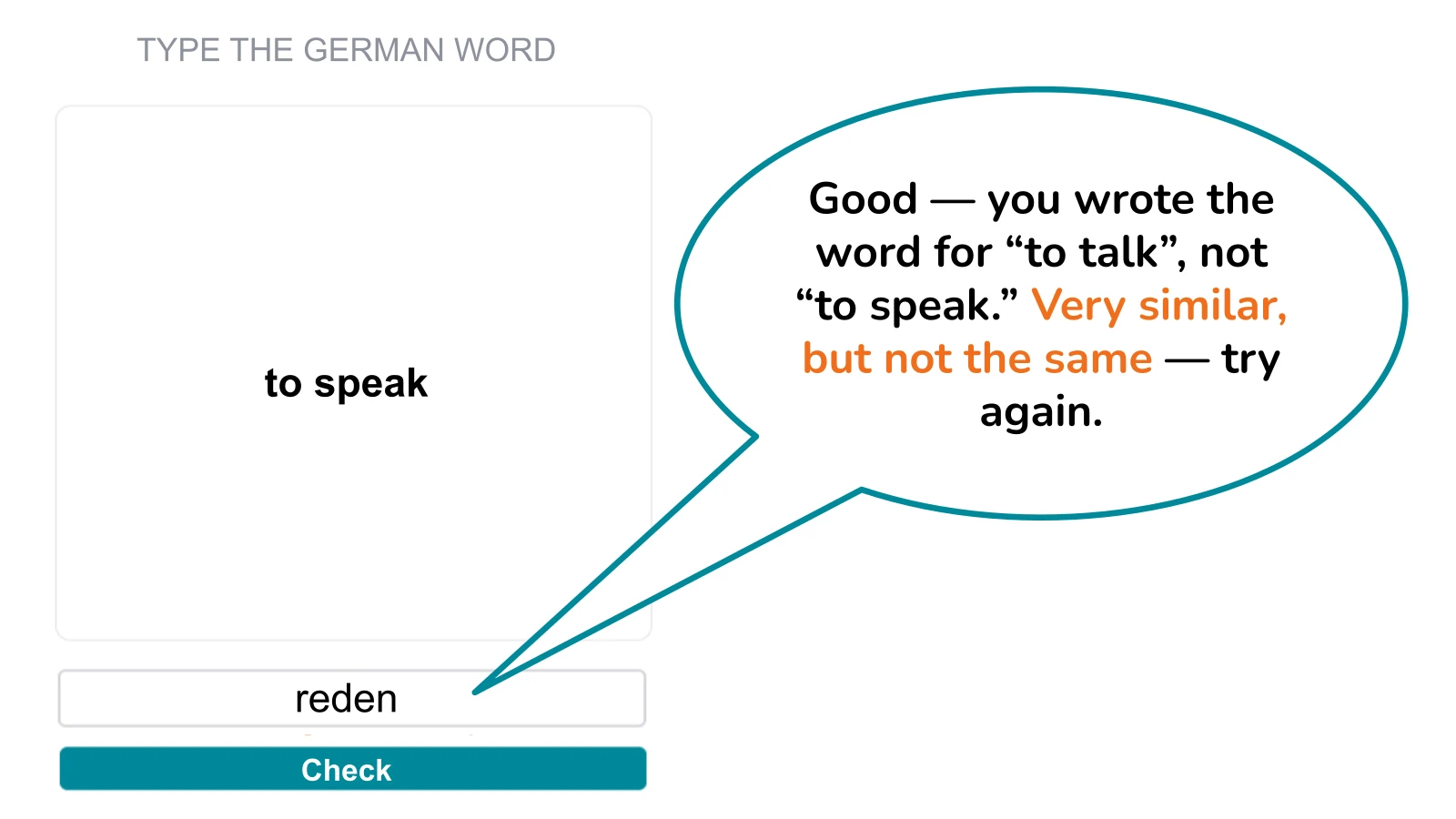
Most study tools mark a word as incorrect for the smallest mistake, e.g. a missing plural, the wrong article, a typo, or not using inclusive language. That punishes students for near-perfect answers and teaches them to dread the trainer.
The Impuls Deutsch Vocabulary Trainer gives a hint instead and lets students fix and resubmit. Students correct the detail they missed rather than redoing the whole word, which keeps frustration low and their attention on what actually needs work.
Built for your course
Made for Impuls Deutsch
Because it’s specifically built for the Impuls Deutsch textbook series, every unit’s vocabulary is already pre-loaded — nothing to import or set up. The familiar characters from the Interactive Grammar Videos reappear throughout, greeting and encouraging students as they study. As the trainer knows when students learn specific grammatical items, it will also only ask students to add plural or past tense forms once they have been introduced.
The Impuls Deutsch Vocabulary Trainer was developed by Niko Tracksdorf, Associate Professor of German, Herausgeber and co-author of the Impuls Deutsch series; it is not an official product of Klett World Languages. Even so, the KWL Hub links directly to the trainer and even to the exact study set for the day from within the Before-Class book LERNEN so students move seamlessly from their LERNEN homework to the corresponding vocabulary practice. And because it isn’t a for-profit product, there is no privacy issue because no data is collected nor are there disruptive ads.
Tailor the vocabulary to your class
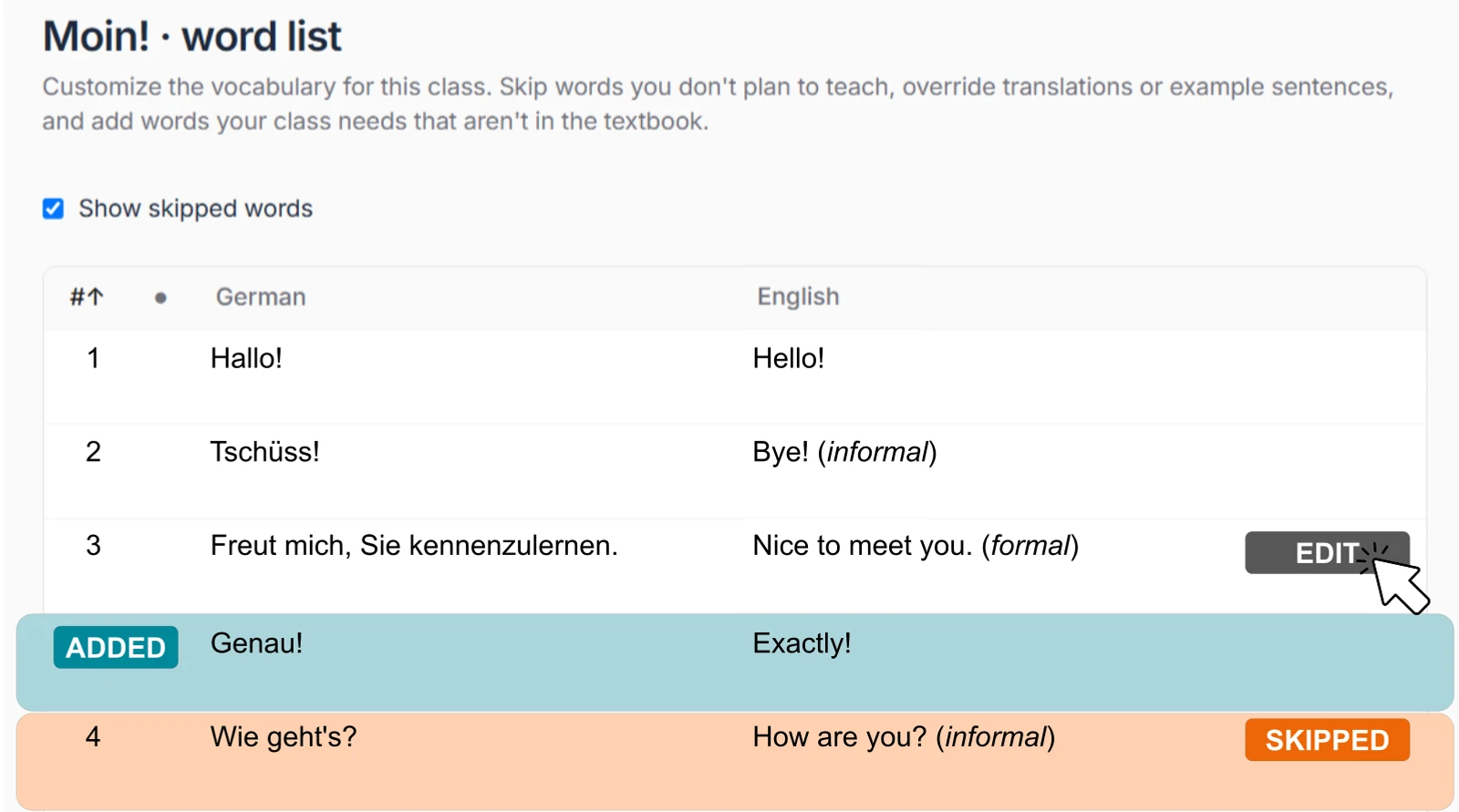
You decide what students study. Choose which units your class covers and which ones to leave out. You can also add your own words to any unit when you bring in additional texts or your class has its own set of terms. Anything you add stays specific to your class. You can skip the words you consider less essential. If you want to emphasize certain meanings of words, you can even edit the English translation within the trainer. The result is a vocabulary set tailored to your class.
For teachers
Grading and pacing on your terms
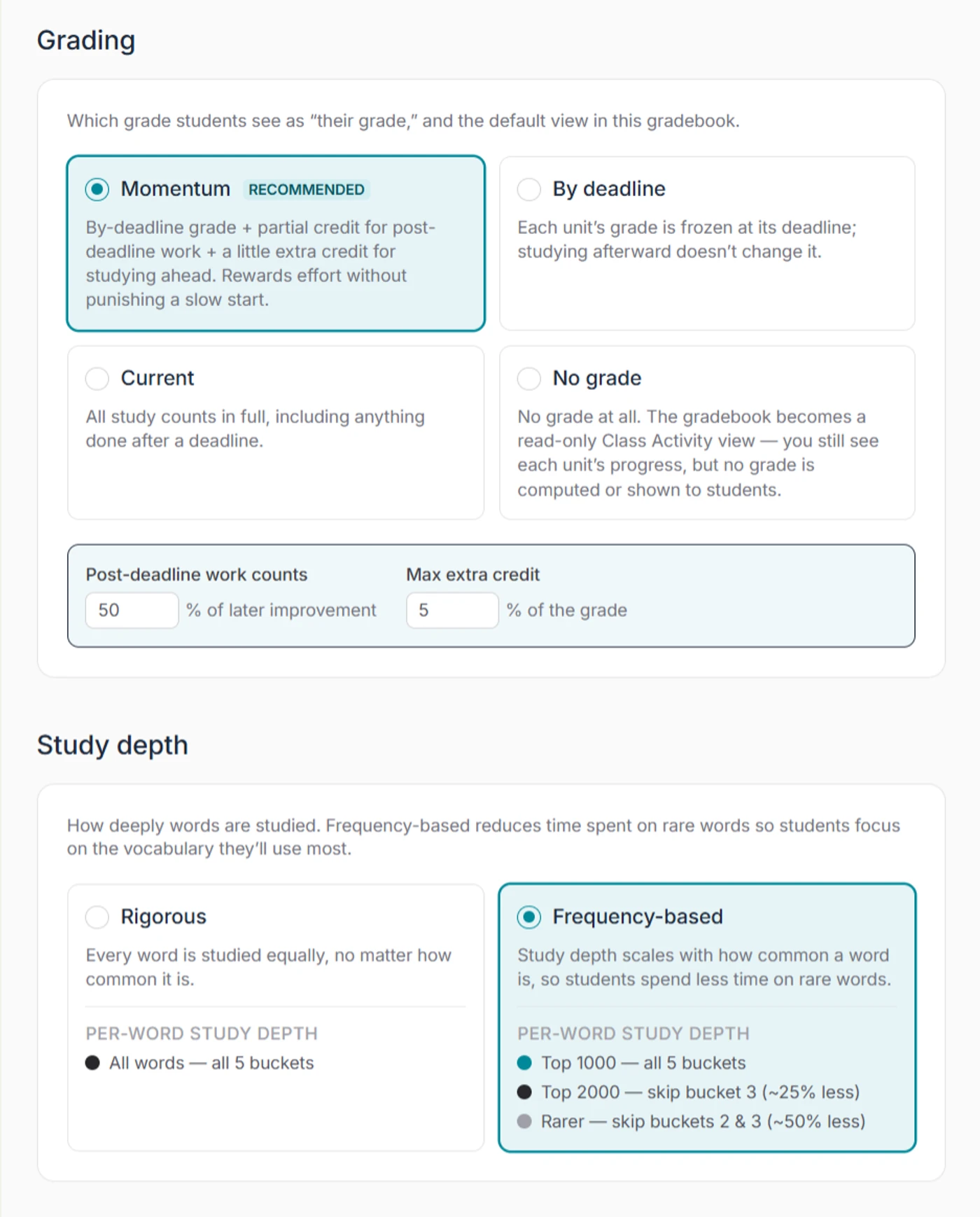
Decide how vocabulary counts by picking from four grading modes:
- 1)choose the ungraded mode
- 2)grade by a set deadline, freezing each unit’s grade when it’s due
- 3)grade on current progress, irrespective of deadlines
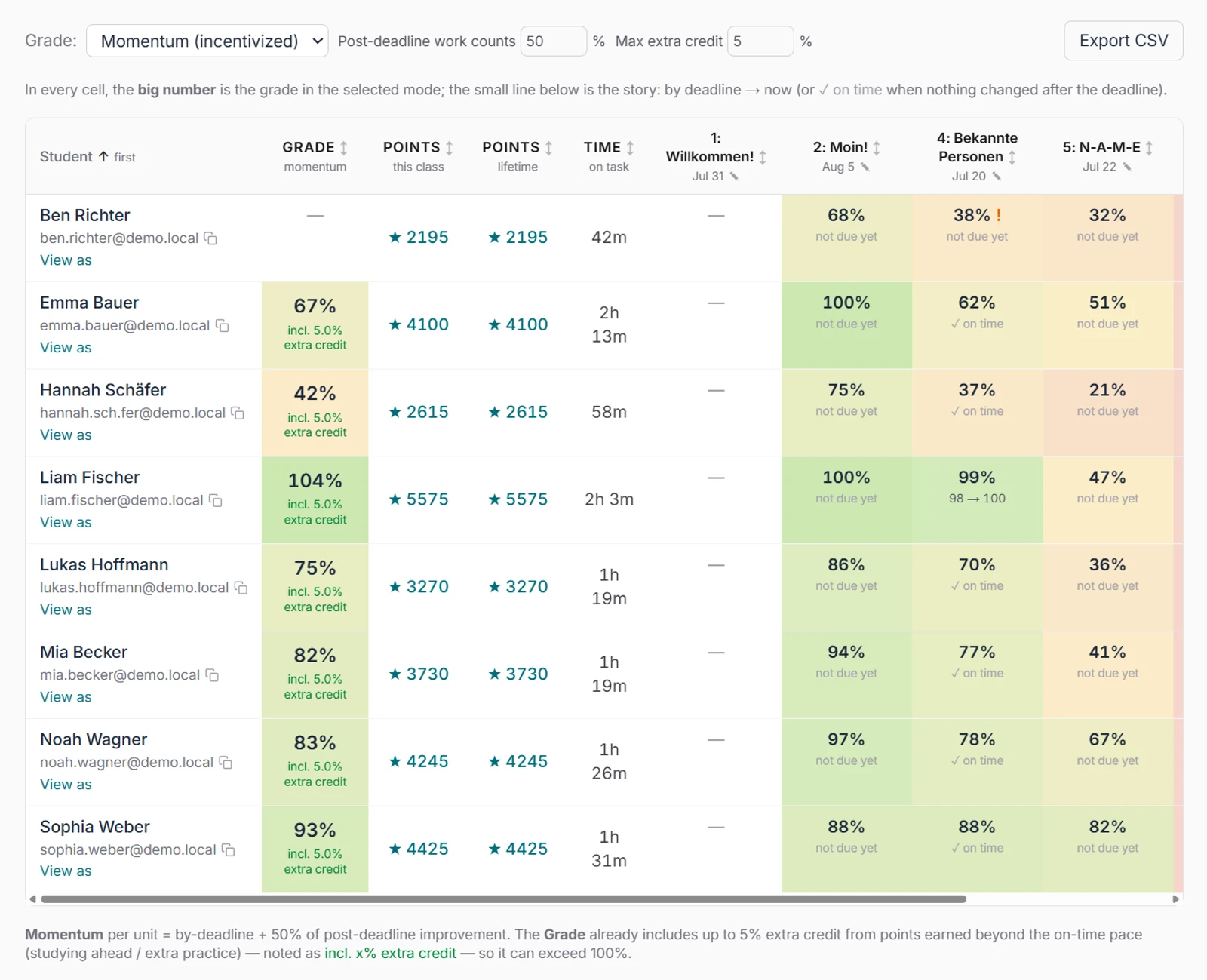
- 4)use our signature Momentum grading, which adds partial credit for work done after the deadline and extra credit for studying ahead or doing extra practice rounds, rewarding effort and good study practices.
You also choose how frequently words are studied: every word can move through all five buckets, or you can focus on frequency, where the most common German words need to progress through all five buckets whereas less frequent ones take a shorter path.
Individual students can be supported with built-in accommodations, such as extending a student’s study time before a deadline or changing the deadlines (e.g. of earlier units for students who joined the class late).
You always know what’s going on
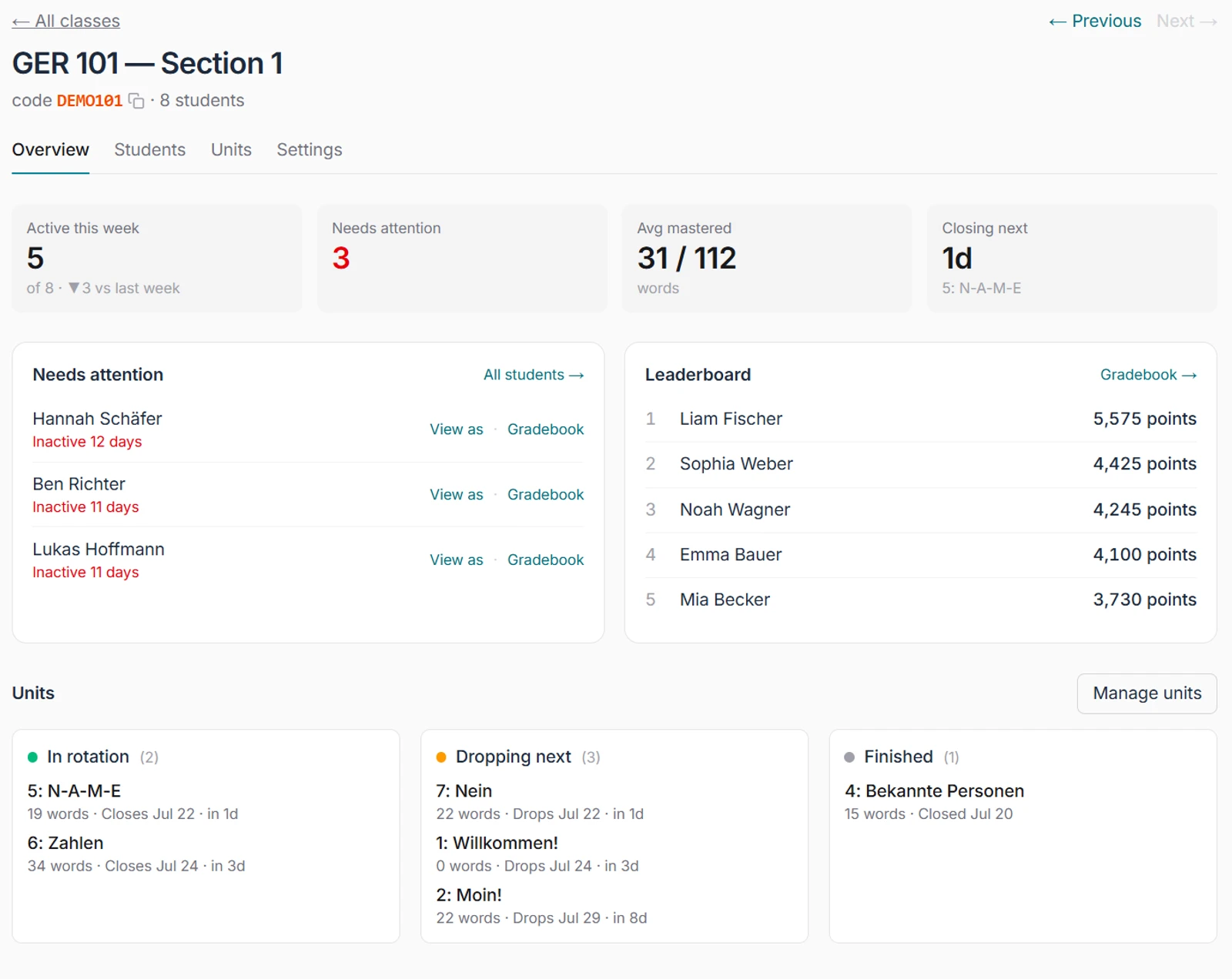
Instructors see everything that matters at a glance. Beyond the grades and points earned from study behavior, the dashboard flags students who haven’t practiced their vocabulary in a while or who are in danger of falling behind. You can receive notifications before a small gap becomes a larger issue.
The dashboard also includes detailed statistics, e.g. how many minutes each student and the class on average has spent studying the vocabulary, so you can address study habits.
You can also identify words a specific class keeps missing, ranked per unit by how much the class as a whole struggles with them. It shows you exactly which words to emphasize in class and lets you decide whether to purposefully include them in an in-class vocabulary quiz or leave them out.
Share with co-teachers and TAs
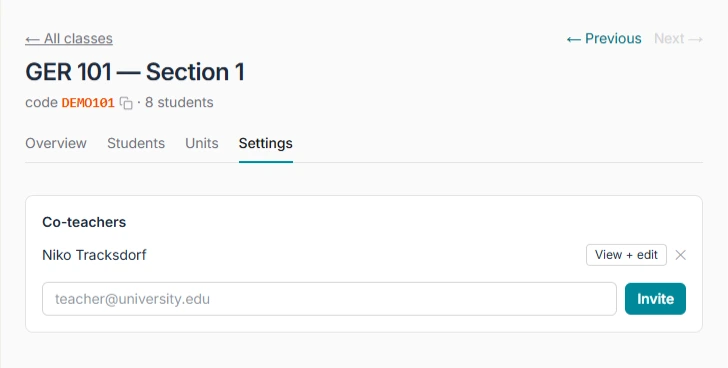
Every class can be shared with another instructor, and you decide how much access they get. Built with TA-driven programs in mind, the sharing options let you add your Graduate Teaching Assistants view-only, which gives them access to the class statistics and gradebook without the ability to make changes, or as full co-teachers who can adjust the class however they see fit, from deadlines and the grading mode to adding or skipping words in any vocabulary set.
For students
Rewards for getting ahead
Students can choose to study ahead or add extra practice rounds: high-frequency words, the words they find difficult, or a review of selected units or chapters.
Good habits pay off: students earn points on the class leaderboard and, when the teacher has chosen Momentum grading, extra credit that rewards studying ahead of the deadline rather than cramming. Small wins, like earning the trophy for first place, keep motivation high and studying steady. And if you do not like the gamification elements, it’s easy to deactivate.
Student support before falling behind
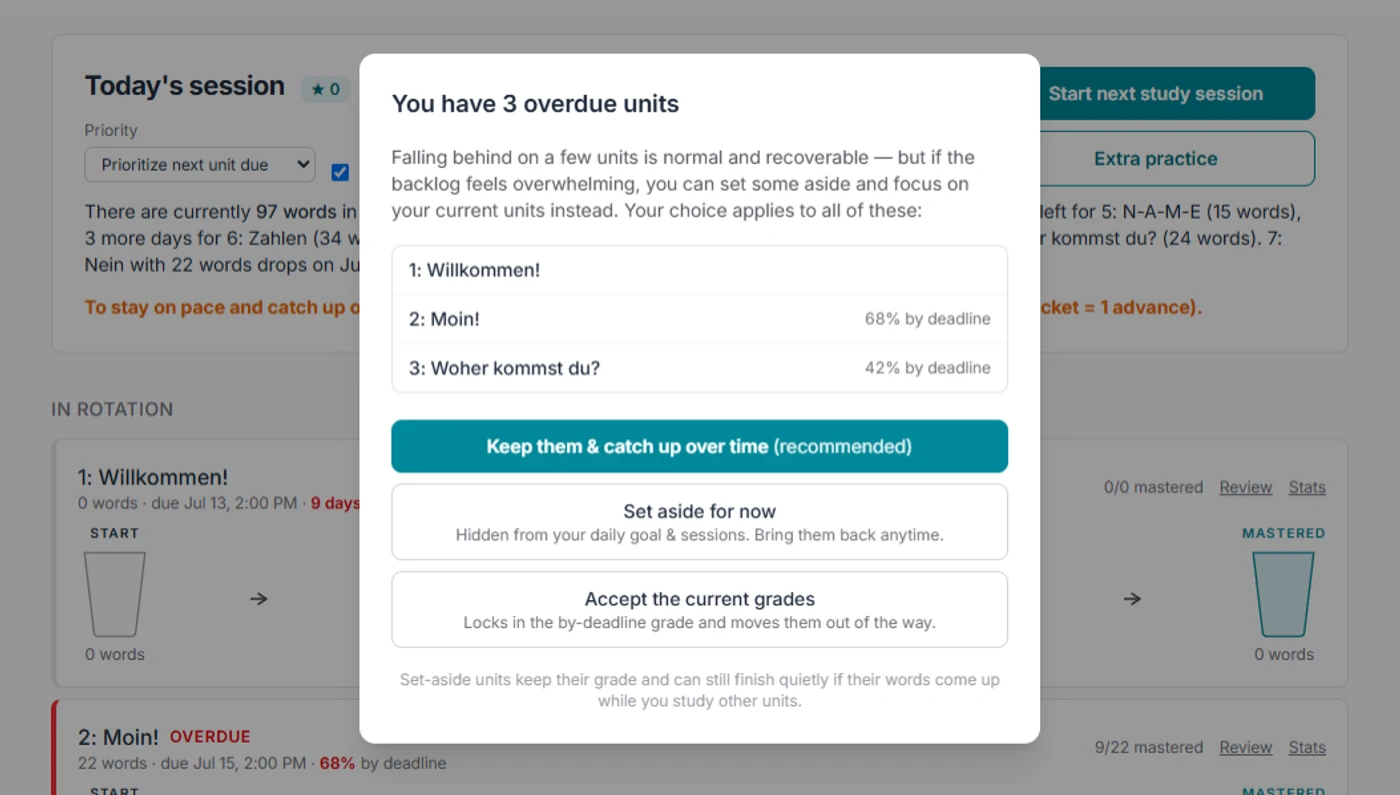
If a student falls behind, the built-in tutor can help them get back on track. They can choose to focus on the current chapters, concentrate on catching up, or do a mix of both; the tutor then assembles study rounds toward that goal and gives individual daily recommendations for how much and how long to study each day to get there.
Throughout, students see clear statistics on their own progress: what they’ve mastered, how much they’ve studied, and where they stand.
Bring it to your Impuls Deutsch class
Free for students, with no ads and no data collection. Sign in or create a teacher account to set up your first class.